
Residential intercom system in Brooklyn
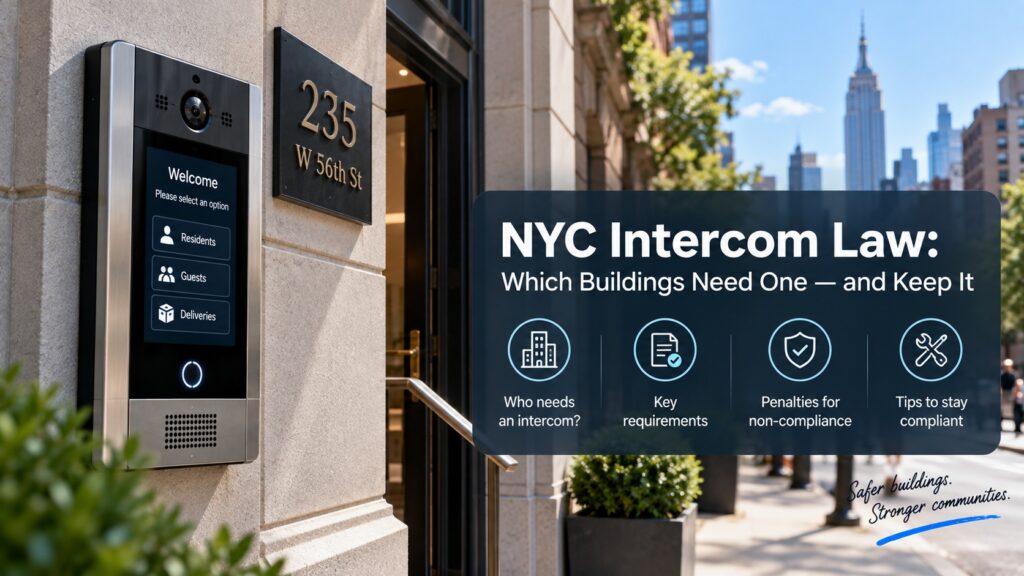
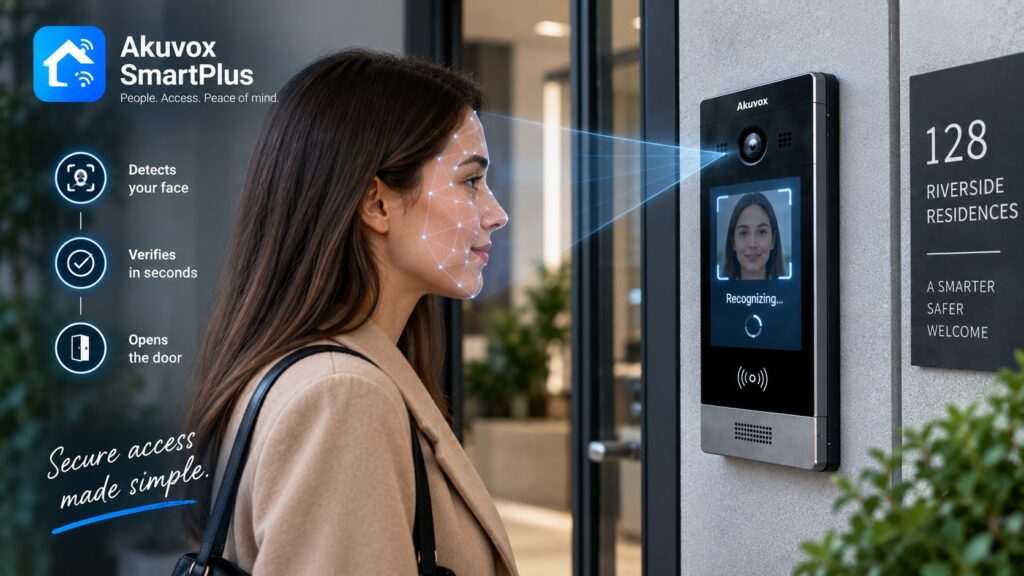
A residential intercom helps residents communicate with visitors before granting access to a home or residential property. Depending on the building configuration, it can connect an entrance with an indoor monitor, smartphone, door lock, gate operator, or access control system.

Customized Security Solutions
We design tailored intercom and access control systems based on your property's unique requirements, ensuring the right fit for every project.

Professional Installation
Our experienced technicians handle every stage of the installation process, delivering reliable performance and attention to detail.

Advanced Technology
We provide modern, feature-rich solutions with cloud management, mobile access, and seamless integration capabilities.

Ongoing Support & Maintenance
From system setup to long-term service, our team is committed to keeping your security solutions operating efficiently.
The appropriate solution depends on whether the property is a single-family home, townhouse, multi-unit building, or gated residential community. The number of entrances, residents, visitor volume, and existing security equipment should all be considered before selecting the system.
For property owners looking for a residential intercom system in Brooklyn, the first step is to determine how visitors currently enter the property and which access points need communication or remote release.
What Does a Residential Intercom System Include?
A residential intercom is not necessarily a single device. A complete installation can combine several components that work together.
Typical components include:
- Entrance station.
- Indoor monitor.
- Camera.
- Doorphone.
- Electric lock.
- Access controller.
- Gate operator.
- Mobile application.
- Network equipment.
The entrance station is installed where visitors arrive. Residents can receive the call through an indoor device or compatible smartphone. If the system is connected to appropriate access hardware, the resident can also release a door or gate.
A simple property may only need one entrance station and one indoor monitor. A larger residential property can require several stations, multiple answering devices, and centralized access management.
Which Residential Properties Can Use an Intercom?
Intercom technology can be adapted to different residential environments. The requirements change according to the number of residents and how people enter the property.
Single-Family Homes
A homeowner may use an intercom at the front door or driveway gate to communicate with visitors before opening the entrance.
Townhouses
A townhouse can use an entrance station for an individual front door or a shared controlled entrance.
Multi-Unit Residential Properties
Buildings with multiple apartments may need a directory or entrance station that can route visitors to individual residents.
Gated Residential Communities
A gate intercom can provide communication between visitors and residents before allowing vehicle or pedestrian access.
Residential Buildings with Multiple Entrances
A larger property may have separate main, side, parking, service, and pedestrian entrances that require different access rules.
This makes it important to plan the system around the property rather than selecting equipment before understanding how residents and visitors use the entrances.
How Residents Interact with Visitors
The basic visitor workflow is straightforward:
Visitor arrives → uses entrance station → resident receives call → visitor is identified → resident grants or denies access.
The same process can be used for different types of visitors.
- Guests. Residents can communicate with friends and family before allowing them to enter.
- Deliveries. A resident can identify a delivery driver and decide how the package should be handled.
- Contractors. Service personnel can explain why they have arrived before receiving access.
- Unexpected Visitors. The resident can communicate with an unknown person without opening the entrance immediately.
This gives residents control over visitor access while keeping regular entry convenient for authorized users.
Audio, Video or Both?
Residential properties do not all need the same level of communication.
Audio Intercom
An audio system can be appropriate when the main requirement is two-way communication.
It can work well for:
- Simple entrances.
- Secondary doors.
- Properties where visual identification is not required.
Video Intercom
Video provides additional information by showing the person at the entrance.
It can be useful for:
- Unknown visitors.
- Deliveries.
- Contractors.
- Driveway entrances.
- Shared residential entrances.
Video and Mobile Access
A combination of video and mobile communication can allow residents to identify visitors even when they are not near an indoor monitor.
The decision should be based on how the entrance is used, the level of visitor verification required, privacy considerations, and the available budget.
Door and Gate Access from the Intercom
An intercom can be connected to compatible access hardware so that residents can release an entrance after communicating with a visitor.
Possible applications include:
- Front doors.
- Lobby doors.
- Pedestrian gates.
- Driveway gates.
- Garage entrances.
- Controlled secondary entrances.
The relationship between the components is important:
Intercom communicates → access controller receives command → lock or gate operator releases the entrance.
The intercom itself does not necessarily perform the physical locking or opening function. The required interface depends on the type of lock, automatic door, or gate operator installed at the property.
Before integration, the existing hardware should be checked for compatibility.
Residential Intercom with Indoor Monitor
An indoor monitor provides residents with a dedicated device for handling entrance calls.
Depending on the model, it can allow the resident to:
- Answer a call.
- See the visitor.
- Communicate with the visitor.
- Release the entrance.
- Monitor a connected entrance.
- Use other supported functions.
The monitor can be installed in a convenient location inside the property, such as a hallway, kitchen, home office, or reception area.
A larger residential property may require multiple indoor stations so that residents or staff can answer calls from different locations.
The number and placement of monitors should be established during system design rather than after the equipment has been selected.
Smartphone Access for Residents
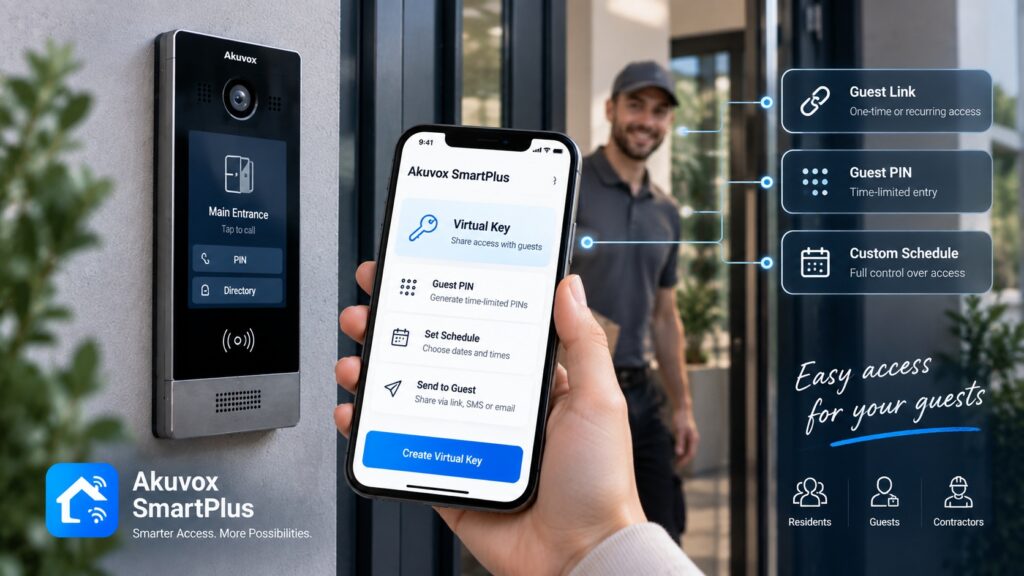
A compatible mobile configuration gives residents another way to handle visitor calls.
For example:
Visitor arrives → entrance station sends notification → resident answers on smartphone → visitor is identified → compatible door or gate is released.
This can be useful when the resident is:
- In another room.
- Outside in the yard.
- At work.
- Running errands.
- Away from the property.
- Unable to reach the indoor monitor.
Smartphone access can be particularly convenient for deliveries and scheduled visitors because the resident does not have to be physically close to the entrance.
The available functions depend on the selected intercom platform, mobile application, network connection, and access-control equipment.
Residential Intercom for Multiple Entrances
Some residential properties have several ways to enter.
For example:
Main entrance + side door + driveway gate + pedestrian gate
It may not be necessary to install identical equipment at every point.
The system can be planned according to the role of each entrance:
- Main entrance for guests.
- Driveway gate for vehicle access.
- Pedestrian gate for visitors on foot.
- Service entrance for contractors.
- Restricted entrance for authorized users.
The property owner or manager can determine which entrances require video, which should generate calls, who receives those calls, and which doors or gates can be released remotely.
This approach can avoid unnecessary equipment while providing the required functionality at important access points.
Integrating Intercom with Residential Security
An intercom can work as part of a larger residential security and access infrastructure.
Depending on compatibility, it can be integrated with:
- Security cameras.
- Access control.
- Smart locks.
- Alarm systems.
- Automatic gate operators.
- Home automation systems.
For example, a camera system can provide additional surveillance while the intercom handles direct communication with the visitor. Access control can manage resident credentials, while the intercom provides a way to verify visitors.
These systems perform different functions and should not automatically be treated as interchangeable. The integration should be planned according to the property’s actual security and access requirements.
Intercom for New Residential Construction
New construction provides an opportunity to plan the intercom before walls, doors, and entrance areas are finished.
The project can account for:
- Cable routes.
- Network connections.
- Entrance station locations.
- Power requirements.
- Indoor monitor locations.
- Door locks.
- Gate operators.
- Access control.
- Equipment cabinets.
Planning these elements early can make installation more straightforward and reduce the need to modify finished surfaces later.
It is also useful to consider future requirements. For example, a property may initially have one controlled entrance but add another gate or access point later.
Designing sufficient infrastructure from the beginning can make future expansion easier.
Replacing an Old Residential Intercom
An outdated intercom can become inconvenient when residents experience poor communication or limited functionality.
Common reasons for replacement include:
- Poor audio quality.
- Damaged handsets.
- No video.
- Outdated entrance station.
- No smartphone functionality.
- Difficult maintenance.
- No gate integration.
- Limited access-control compatibility.
Replacement does not always mean removing every existing component.
Before modernization, inspect:
- Entrance station.
- Indoor monitors or handsets.
- Wiring.
- Power supply.
- Door locks.
- Gate operator.
- Network.
- Access control equipment.
In some properties, existing infrastructure can be reused. In others, replacing several components together can provide a more reliable long-term solution.
How to Select a Residential Intercom System
The right system should be based on the property’s actual access requirements.
- Property Type. Determine whether the installation is for a single-family home, townhouse, multi-unit building, gated community, or another residential property.
- Number of Residents. The number of people who need to receive calls can affect the required answering devices and user configuration.
- Number of Entrances. List every door and gate where visitors may need to communicate with residents.
- Visitor Volume. A private home with occasional visitors has different requirements from a residential property with frequent deliveries and service calls.
- Video Requirement. Determine whether residents need to visually identify visitors before providing access.
- Indoor Monitor. Decide whether dedicated indoor devices are required and where they should be located.
- Smartphone Access. Consider whether residents need to answer calls while away from a fixed monitor.
- Door and Gate Release. Identify which entrances should support remote release and what hardware currently controls them.
- Access Control. Determine whether the intercom needs to operate alongside resident credentials or an existing access-control system.
- Existing Infrastructure. Review wiring, network equipment, locks, gate operators, and existing intercom devices.
- Future Expansion. Consider potential additional entrances, residents, common areas, or security equipment.
A practical selection process is:
Property type → entrances → visitor scenarios → communication method → access release → security integration → installation.
Akuvox Residential Intercom Solutions
Akuvox provides intercom and access-control equipment that can be configured for residential applications.
A residential installation can include:
- Doorphones.
- Video entrance stations.
- Indoor monitors.
- Smartphone communication.
- Access control.
- Door release.
- Gate release.
- Multiple entrance stations.
The equipment can be configured according to the property’s layout and the way residents need to communicate with visitors.
For example, a residential entrance can use a video doorphone connected to an indoor monitor, while compatible mobile functionality provides another way for residents to answer calls.
A larger property can use multiple entrance stations and answering devices for different access points.
The appropriate equipment depends on the number of entrances, number of residents, existing infrastructure, required functions, and access hardware.
Residential Intercom Installation in Brooklyn
Installation should begin with an assessment of the property.
- Property Assessment. The entrances, doors, gates, existing intercom, wiring, network, locks, and access-control equipment are reviewed.
- System Planning. The required entrance stations, monitors, mobile functions, and access-release points are determined.
- Equipment Selection. The appropriate intercom devices, controllers, and related components are selected.
- Installation. Entrance stations, indoor monitors, network equipment, and access-control components are installed in their planned locations.
- Integration. The intercom is connected to compatible locks, automatic doors, gate operators, and other systems.
- Configuration. Residents, answering devices, call routing, and supported mobile functions are configured.
- Testing. Each entrance should be tested to confirm that communication, video, notifications, and access-release functions operate correctly.
A detailed installation process is particularly important when the property has multiple entrances or existing access-control equipment.
Get a Residential Intercom System in Brooklyn
A residential intercom should make visitor communication easier without creating unnecessary complexity for residents.
Before planning an installation, it is useful to determine:
- Type of residential property.
- Number of entrances.
- Number of residents.
- Door and gate types.
- Existing intercom.
- Need for video.
- Indoor monitor requirements.
- Smartphone access.
- Access-control requirements.
- Existing network and wiring.
- Future expansion plans.
Akuvox NYC provides intercom and access-control equipment for residential properties in Brooklyn. The system can be planned around the property’s entrances, resident requirements, existing infrastructure, and preferred method of visitor communication.
If you are considering residential intercom installation in Brooklyn, a property assessment can help determine the appropriate equipment, integration, and installation approach.
Request a Quote to discuss an intercom solution for your residential property in Brooklyn.
Other Services in BROOKLYN
Other Locations we Serve
FAQ
It is a communication and visitor-access solution that allows residents to communicate with people at a controlled entrance and, when connected to compatible hardware, release a door or gate.
Yes. A compatible intercom can send an opening command to a gate operator or access controller. The gate operator is responsible for physically opening and closing the gate.
Compatible systems can allow residents to receive and answer visitor calls through a smartphone. Remote access functions depend on the equipment and configuration.
Yes. A residential installation can include multiple entrance stations, with different call-routing and access rules for each location.
Yes. The intercom can handle visitor communication while an access-control system manages resident credentials and controlled entry.
Not necessarily. Audio may be sufficient for some properties. Video can be useful when residents want to visually verify visitors before granting access.
In many cases, yes. Existing wiring, locks, network equipment, and other components should be assessed to determine what can be reused.
Yes. New construction is often a good opportunity to plan cabling, entrance stations, monitors, access hardware, and network infrastructure before finishing the property.
Yes. The configuration can support multiple residents or users when the selected equipment and platform provide the required user-management functions.
The price depends on the property type, number of entrances, number of users, selected devices, video requirements, door or gate hardware, access control, wiring, and installation scope. A property-specific assessment is needed to determine the total cost.
How It Works
Consultation & Needs Assessment
We discuss your property, security goals, and operational requirements to understand your specific needs.
Customized Solution Design
Our specialists recommend and design an intercom or access control solution tailored to your home, apartment building, or commercial facility.
Professional Installation
Certified technicians install and configure all system components, ensuring seamless integration and reliable performance.
Ongoing Support & Maintenance
We provide system testing, user training, maintenance, and technical support to keep your solution operating efficiently for years to come.
Get a Quote
Need an access control or intercom system? Tell us about your project and get a tailored solution from Akuvox NYC.
Other Services
Latest Articles