
Intercom system for single-family homes in Brooklyn
A private home can have several points where visitors need to be identified before they are allowed onto the property: a front door, driveway gate, pedestrian gate, garage, or secondary entrance. Walking to each entrance every time someone arrives is inconvenient, especially when the property has an automatic gate or the entrance is located some distance from the house.

Customized Security Solutions
We design tailored intercom and access control systems based on your property's unique requirements, ensuring the right fit for every project.

Professional Installation
Our experienced technicians handle every stage of the installation process, delivering reliable performance and attention to detail.

Advanced Technology
We provide modern, feature-rich solutions with cloud management, mobile access, and seamless integration capabilities.

Ongoing Support & Maintenance
From system setup to long-term service, our team is committed to keeping your security solutions operating efficiently.
A properly planned house intercom system in Brooklyn can connect these access points with an indoor monitor or smartphone. The homeowner can communicate with a visitor, see who is outside when video is available, and release a compatible door or gate without going directly to the entrance.
What a Home Intercom Can Control
The configuration of an intercom for a single-family property depends largely on how people enter the home.
Possible installation points include:
- Front door.
- Driveway gate.
- Pedestrian gate.
- Garage entrance.
- Side entrance.
- Secondary entrance.
A simple property may require only one entrance station at the front door. A larger house with a driveway and separate pedestrian entrance may benefit from several connected stations.
The important point is to consider the entire property rather than selecting an intercom based only on the front door. Each entrance can have different requirements for communication, video, and access release.
A Typical Visitor Scenario at a Private Home
The basic visitor interaction can be simple:
Visitor arrives → calls the homeowner → homeowner sees or speaks with the visitor → access is approved → door or gate opens.
The same system can handle different situations.
- Guest Arrival. A friend or family member can contact the homeowner before entering the property.
- Delivery. A delivery driver can communicate with the resident when a package requires direct handoff.
- Contractor or Service Worker. A plumber, electrician, cleaner, or technician can identify themselves before being given access.
- Family Member. Household members can use their own authorized access methods, while the intercom remains available for visitors who do not have credentials.
This gives the homeowner more control over unexpected visits without making normal arrivals unnecessarily complicated.
Choosing Between Audio and Video Intercom
The first decision is whether the homeowner needs audio communication only or wants to see visitors as well.
Audio Intercom
An audio system can be sufficient when the primary requirement is speaking with the person at the entrance.
It may be appropriate for:
- Simple front-door installations.
- Secondary entrances.
- Locations where visual identification is not important.
Video Intercom
Video adds visual verification before access is granted.
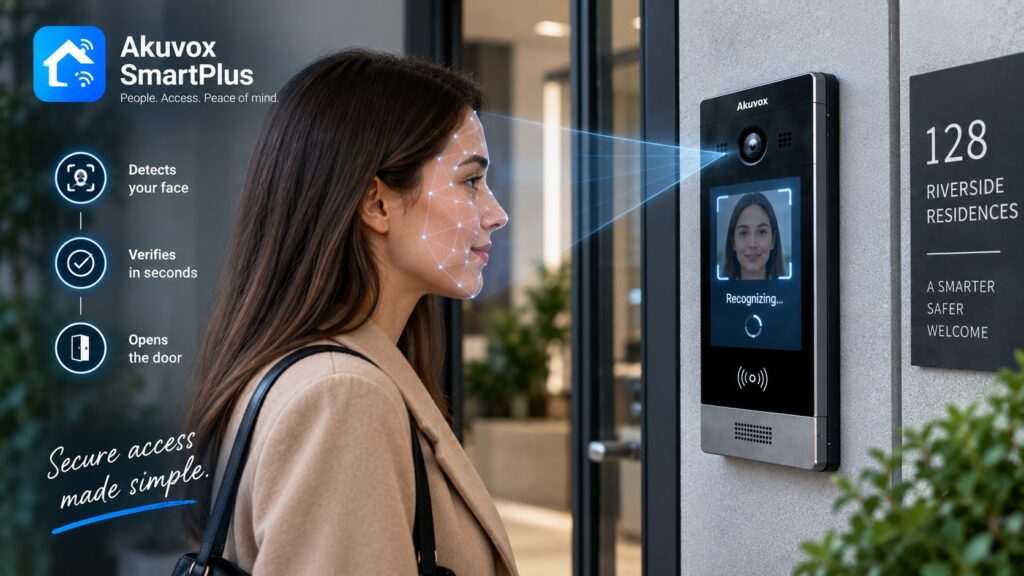
A video intercom system for home in Brooklyn can allow the homeowner to see the person at the entrance while communicating with them.
This can be particularly useful for:
- Unknown visitors.
- Deliveries.
- Contractors.
- Driveway entrances.
- Properties with limited visibility from the house.
The quality of the video depends not only on the camera itself but also on its position, lighting, viewing angle, and the conditions around the entrance.
Intercom for the Front Door
The front door is usually the simplest location for a residential intercom.
A typical configuration can provide:
- Visitor calling.
- Two-way audio.
- Video communication.
- Indoor answering.
- Door release.
- Smartphone communication where supported.
Unlike a conventional doorbell, an intercom can provide a two-way communication channel before the homeowner decides whether to open the entrance.
For example, a visitor can explain why they have arrived before the homeowner releases the door. This can be useful when the homeowner is expecting a contractor but does not recognize the person immediately.
A door intercom system for home in Brooklyn should be positioned so that the visitor can easily use the station and the camera, where available, has an appropriate view.
Intercom for Driveway and Pedestrian Gates
A property with an automatic driveway gate has different requirements from a home where visitors walk directly to the front door.
A gate installation can follow this process:
Visitor arrives at driveway → uses intercom → homeowner receives call → visitor is verified → gate operator opens the entrance.
A separate pedestrian gate can use its own intercom station when pedestrian and vehicle access need to be handled independently.
The gate intercom should be compatible with the equipment responsible for physically opening the gate. The intercom sends an appropriate control signal, while the automatic gate operator performs the opening movement.
Before installation, check:
- Gate type.
- Sliding or swing mechanism.
- Existing gate operator.
- Control input.
- Power supply.
- Relay requirements.
- Safety sensors.
- Distance from the gate to the house.
Indoor Monitors for Homeowners
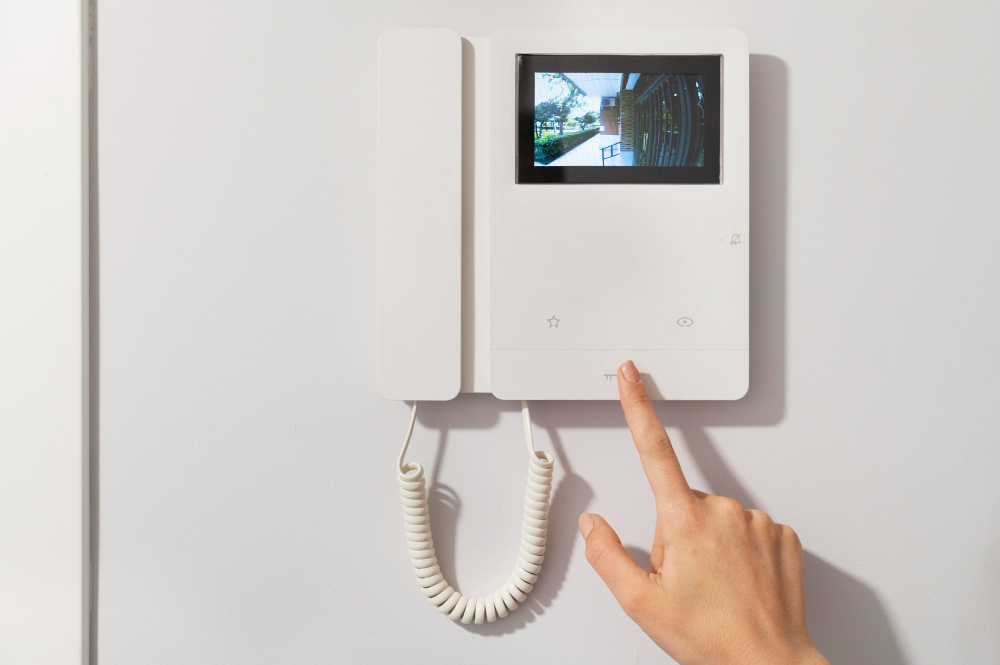
An indoor monitor gives the homeowner a fixed location for receiving entrance calls.
Depending on the device, the monitor may allow the user to:
- Answer a call.
- See a visitor.
- Speak with the visitor.
- Release a door or gate.
- View a connected entrance.
- Access other supported functions.
The monitor can be installed in a location where household members are likely to notice incoming calls, such as a hallway, kitchen, home office, or another frequently used area.
For larger homes, more than one indoor station may be appropriate.
A home intercom with video in Brooklyn can provide a dedicated screen for viewing the visitor while maintaining two-way communication from inside the property.
The exact capabilities depend on the selected model, so the number and location of monitors should be considered during system planning.
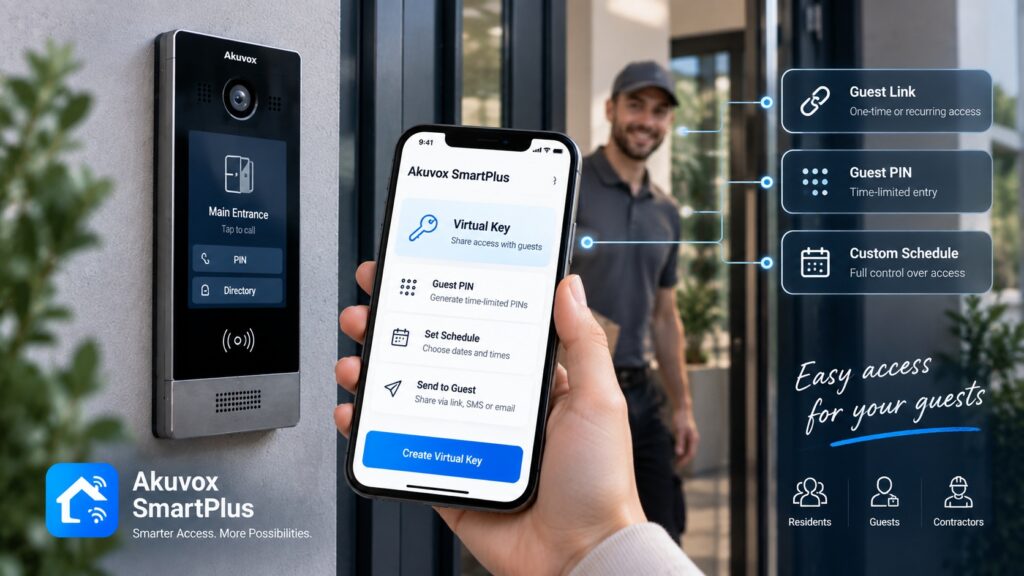
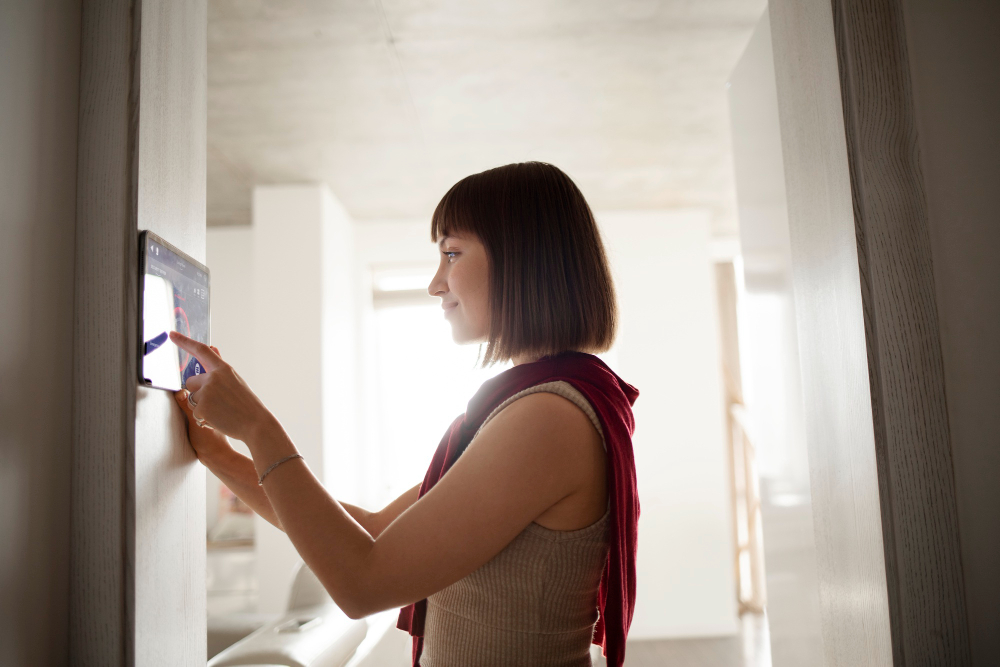
Answering Intercom Calls from a Smartphone
A smartphone can provide an alternative to a fixed indoor monitor.
A compatible configuration can allow the homeowner to receive an entrance call while:
- Working in another room.
- Working from home.
- Outside in the yard.
- At work.
- Running errands.
- Away from the property.
A typical scenario is:
Visitor arrives → intercom sends the call to the smartphone → homeowner communicates with visitor → homeowner releases the compatible entrance if necessary.
This can be particularly convenient for deliveries. The homeowner does not need to be standing near the entrance to determine who has arrived.
A smart intercom system for home in Brooklyn can combine visitor communication, video, mobile access, and compatible entrance-release functions into one residential setup.
Mobile functions depend on the selected equipment, application, network connection, and configuration.
Intercom and Smart Home Integration
A residential intercom can be part of a broader home technology setup.
Depending on compatibility, it may work alongside:
- Smart locks.
- Automatic gate operators.
- Security cameras.
- Alarm systems.
- Home automation.
- Access control equipment.
For example, the intercom can provide visitor communication while a separate gate controller handles the physical opening mechanism.
Integration should be planned around actual compatibility. Not every intercom, smart lock, camera, or home automation platform can communicate directly with every other device.
A professional assessment can help determine which existing components can remain and which may need to be replaced.
Privacy and Security Considerations
A home intercom should make access more convenient without unnecessarily exposing the property or its occupants.
When planning the installation, consider:
- User Permissions. Determine which household members can answer calls and release the entrance.
- Mobile Accounts. Smartphone-based access should be configured only for authorized users, with account security and device protection taken into consideration.
- Camera Position. The camera should focus on the entrance and visitor area rather than unnecessarily capturing neighboring properties or unrelated private spaces.
- Network Security. IP-based devices should be connected to a properly configured network. Network access should be managed rather than leaving connected equipment exposed unnecessarily.
- Access Permissions. If the intercom is connected to an access control system, determine who can release which entrance.
These considerations are especially important when the system can be accessed remotely.
Intercom for Homes with Multiple Entrances
A larger property may have several independent access points.
For example:
Front door + driveway gate + pedestrian gate + garage
These entrances do not necessarily need identical equipment.
The homeowner can determine:
- Which entrances require video.
- Which entrances should generate calls.
- Who receives each call.
- Which doors or gates can be released remotely.
- Which entrances should use access credentials instead.
- Whether different family members need different permissions.
For example, the front door may use a video intercom, while a pedestrian gate may require a simpler entrance station.
Planning these functions in advance prevents unnecessary equipment and makes the system easier to use.
Wired vs. IP Intercom for a Home
The connection method is another important consideration.
Wired Intercom
A wired installation can be practical when suitable cabling already exists or when the property is being renovated and new cables can be installed.
It can provide a dedicated physical connection between the entrance and indoor equipment.
IP Intercom
An IP-based system communicates over a network.
It can be useful for homes that require:
- Multiple intercom devices.
- Several entrances.
- Smartphone communication.
- Network-based equipment.
- Future expansion.
The choice depends on the distance between the entrance and the house, existing cabling, network infrastructure, power availability, and installation conditions.
For a property with a long driveway, the network design should be considered before selecting the equipment.
Upgrading an Existing Home Intercom
A homeowner does not necessarily need to keep an outdated system simply because it is already installed.
Modernization can make sense when the existing intercom has:
- Audio-only communication.
- Poor sound quality.
- No video.
- No smartphone functionality.
- A damaged entrance station.
- Outdated indoor equipment.
- No connection to an automatic gate.
- Difficult-to-replace components.
Before replacing the equipment, inspect the existing installation.
Important elements include:
- Door or gate station.
- Indoor monitor or handset.
- Wiring.
- Power supply.
- Door lock.
- Gate operator.
- Network.
- Control relays.
In some cases, existing infrastructure can be reused. In other installations, replacing several components together may provide a more reliable result.
How to Choose an Intercom for a Single-Family Home
The best configuration depends on how the property is used.
- Number of Entrances. Start by listing every entrance where visitors may need to communicate with the homeowner.
- Door or Gate Type. Determine whether each entrance is a standard door, sliding gate, swing gate, pedestrian gate, or another type of access point.
- Video Requirement. Decide whether visual identification is important at each entrance.
- Indoor Monitor. Determine whether a fixed monitor is required and where it should be located.
- Smartphone Access. Consider whether household members need to answer calls while away from the indoor station.
- Door or Gate Release. Identify which entrances should be capable of remote release and what hardware currently controls them.
- Number of Household Users. Determine which family members need to receive calls or operate the entrance.
- Existing Infrastructure. Review wiring, network, locks, gate operators, and existing intercom equipment.
- Future Expansion. If another entrance, gate, camera, or access control function may be added later, the system should be capable of accommodating it.
A practical selection process is:
Entrance points → visitor scenarios → video → answering method → access release → integration → installation
This is more useful than choosing an intercom solely by its screen size, camera resolution, or other individual specification.
Akuvox Intercom Solutions for Single-Family Homes
Akuvox offers doorphones, indoor monitors, and related access solutions that can be configured for residential properties.
A home installation can include:
- Video doorphone.
- Indoor monitor.
- Smartphone communication.
- Door release.
- Gate release.
- Access control.
- Multiple entrance stations.
- Network-based communication.
For example, an Akuvox doorphone can be installed at the main entrance while an indoor monitor provides a fixed answering point inside the house. A compatible mobile configuration can provide another way to handle visitor calls.
For properties with driveway gates or several entrances, the system can be planned around the specific access points instead of using the same configuration for every location.
The appropriate equipment depends on the property’s layout, number of entrances, existing hardware, and homeowner requirements.
Intercom Installation for Single-Family Homes in Brooklyn
A residential installation should begin with an assessment of the property.
- Property Assessment. The entrances, driveway, gates, existing intercom, locks, network, and power requirements are reviewed.
- System Design. The required entrance stations, indoor monitors, mobile functions, and access-release points are determined.
- Equipment Selection. The appropriate doorphones, monitors, controllers, and related components are selected.
- Door and Gate Integration. The intercom is connected to compatible locks, automatic doors, or gate operators.
- Network and Mobile Setup. IP connectivity and supported smartphone functions are configured where required.
- Testing. Each entrance should be tested to confirm that calls, video, communication, and release functions work as expected.
A property assessment is particularly important when the house has a long driveway, multiple gates, existing automation, or an older intercom.
Get an Intercom System for Your Brooklyn Home
A residential intercom should make it easier to manage visitors without complicating everyday access for the people who live in the house.
A modern home intercom system in Brooklyn can be planned around the property’s actual entrance layout, preferred communication method, existing locks or gate operators, and future requirements.
Before planning a system, consider:
- Number of entrances.
- Front door and gate types.
- Distance between entrances and the house.
- Need for video.
- Number of household users.
- Indoor monitor requirements.
- Smartphone access.
- Existing door locks or gate operators.
- Existing wiring and network.
- Future expansion.
Akuvox NYC provides Akuvox intercom and access control equipment for residential properties in Brooklyn. The configuration can be adapted to the property’s entrance layout and the homeowner’s preferred way of communicating with visitors.
If you are considering an intercom system for a single-family home, a property assessment can help determine which equipment and installation approach are appropriate.
Request a Quote to discuss an intercom solution for your Brooklyn home.
Other Services in BROOKLYN
Other Locations we Serve
FAQ
An intercom can be useful when the property has a controlled entrance, driveway gate, pedestrian gate, or another access point where visitors need to communicate with the homeowner before entry.
Yes, when the intercom is connected to a compatible gate operator or control system. The intercom provides the communication and opening command, while the gate operator physically opens the gate.
Yes. A video-capable entrance station can transmit the visitor's image to a compatible indoor monitor or smartphone.
Compatible systems can support smartphone communication, allowing authorized users to receive visitor calls and use supported remote access functions.
It can be possible to connect multiple entrances to one overall intercom configuration. The exact architecture depends on the equipment, locks, gate operators, and number of access points.
Yes, provided the intercom and gate operator have a compatible control interface. The wiring and relay requirements should be checked before installation.
It should be placed in a location where household members can easily hear or notice incoming calls. Common options include a hallway, kitchen, home office, or another frequently occupied area.
Often, yes. Existing wiring, locks, gate operators, and network equipment should be assessed to determine which components can be retained and which need replacement.
An IP system can be useful when a property has multiple entrances, several intercom devices, or requires network and smartphone functionality. The existing network and distance between devices should be considered.
The total cost depends on the number of entrances, type of door or gate, selected equipment, indoor monitors, mobile functions, existing infrastructure, access hardware, and installation requirements. A property-specific assessment is needed to determine the final cost.
How It Works
Consultation & Needs Assessment
We discuss your property, security goals, and operational requirements to understand your specific needs.
Customized Solution Design
Our specialists recommend and design an intercom or access control solution tailored to your home, apartment building, or commercial facility.
Professional Installation
Certified technicians install and configure all system components, ensuring seamless integration and reliable performance.
Ongoing Support & Maintenance
We provide system testing, user training, maintenance, and technical support to keep your solution operating efficiently for years to come.
Get a Quote
Need an access control or intercom system? Tell us about your project and get a tailored solution from Akuvox NYC.
Other Services
Latest Articles