
2-Wire vs IP Intercom Systems: Retrofitting NYC Buildings

When an older New York building upgrades its intercom, the first real fork in the road is the wiring: stick with a 2-wire intercom system that rides the cabling already in the walls, or move to a modern IP system that runs over network cable. The choice shapes cost, disruption, and features more than any single device, so it is worth understanding before you buy.
We retrofit both kinds across the boroughs, and in pre-war buildings the wiring question often decides the whole project. Here is how each approach works and how to choose between them.
In short, a 2-wire system reuses existing two-conductor cabling, which keeps installation cheap and non-disruptive, while an IP system uses network wiring for maximum features and flexibility. For most older NYC buildings, reusing the wiring with a 2-wire system is the practical winner; new construction and feature-heavy projects lean IP.
The two wiring approaches
 Every intercom has to carry power, audio, video, and control signals between the door and the units. The difference between these two systems is simply what cable does that job.
A 2-wire system sends everything down a pair of conductors, the same kind of simple cabling many buildings were wired with decades ago. An IP system sends it as network data over structured cabling, the same family of wiring used for computer networks. That single distinction ripples through cost, install time, and capability.
It helps to keep the comparison grounded in that one fact. Almost every difference people cite between 2-wire and IP — price, mess, speed of install, feature ceiling — traces back to whether the system needs new network cable or can live on the pair already in the wall. Hold that in mind and the rest of the decision gets much simpler.
2-wire intercom systems explained
The defining feature of a 2-wire intercom is that it does a lot with very little cable. Modern electronics squeeze video, audio, power, and door control onto just 2 wires.
- Reuses old cabling: The big advantage is that a two-wire intercom can often run on the existing pair already in the building, avoiding new cable runs.
- Low disruption: Because walls usually stay closed, installation is faster and far less invasive, which residents appreciate.
- Lower cost: Skipping new cabling removes the most expensive and disruptive part of a typical upgrade.
- Capable today: Current 2-wire systems still deliver clear video and app features, so reusing wiring no longer means giving up modern function.
The reason this matters so much is that cabling is the expensive, disruptive part of any intercom project. The door stations and monitors are a known cost; pulling new wire through a finished building is the line item that balloons. A 2-wire system sidesteps it, which is why a retrofit that reuses wiring can come in dramatically lower than one that does not.
IP intercom systems explained
An IP intercom treats the door station like a networked device, sending its signals as data over structured cabling such as Cat5e or Cat6.
That network foundation brings the most flexibility and the richest feature set, and it scales cleanly across very large or complex sites. The trade-off is the wiring itself: a full IP retrofit may require pulling new network cable through the building, which in a finished older structure is exactly the expensive, disruptive work that a 2-wire approach avoids. Where new cabling is already going in, though, IP is a strong, future-friendly choice.
It is also worth being clear about what IP buys you. The advantage is not usually a dramatically better picture at the door; modern 2-wire video is already sharp. It is scale, integration, and headroom — the ability to tie many doors and buildings into one network and to layer on advanced features. For a single small building, much of that headroom may go unused, which is exactly why the wiring cost has to justify itself.
2-wire vs IP at a glance
Here is how the two compare on the points that actually drive the decision.
| Factor | 2-wire system | IP system |
|---|---|---|
| Cabling | Reuses existing 2 wires | Needs network cable (Cat5e/Cat6) |
| Install disruption | Low, walls usually stay closed | Higher if new cable is pulled |
| Cost | Lower for retrofits | Higher when rewiring |
| Features | Strong, covers most needs | Maximum flexibility and scale |
| Best fit | Older buildings with usable wiring | New builds and large, complex sites |
No row makes one universally better; the right answer depends on what wiring your building already has and how far you want to push features.
Why this matters for pre-war NYC buildings
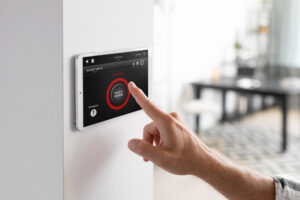 New York’s housing stock makes this comparison especially real. A pre-war building can be 80 or 100 years old, with plaster walls and conduit that make new cable runs slow and costly.
In that setting, the existing wiring is a genuine asset. If the building already has serviceable 2-wire lines from an old buzzer, a modern 2-wire system can often reuse them and deliver video and app access without opening walls. That is why, in much of the city’s older stock, the 2-wire route is not a compromise but the smart, economical default. Forcing IP into a finished pre-war building usually means paying for invasive cabling that the project did not need.
This is not a knock on IP; it is a recognition of context. In a brand-new building where conduit is open and cable is already being pulled, IP is easy and sensible. In a century-old occupied building, the same choice means weeks of invasive work and disruption to residents. The technology is not better or worse in the abstract; it is better or worse for a specific building, and pre-war stock usually points toward 2-wire.
When 2-wire is the right call
For a large share of New York buildings, 2-wire is the obvious pick. It fits a clear profile.
- You have usable existing wiring: The building already has a 2-wire run that tests clean enough to reuse.
- You want minimal disruption: Keeping walls closed and the project short is a priority.
- Budget matters: You want modern video and app features without paying to rewire.
- The building is established: An occupied older building where invasive work would be a hardship.
When IP is worth it
IP earns its place in specific situations where its strengths pay off.
- New construction or gut renovation: Cable is already being run, so the cost gap disappears.
- Very large or complex sites: Big buildings and multi-building campuses benefit from IP’s scalability.
- Maximum features: Projects that want the fullest, most flexible feature set lean IP.
- Existing network cabling: Buildings already wired with structured cable can adopt IP with little new work.
Can you reuse your existing wiring?
This is the question that decides most retrofits, and the honest answer is that it depends on the condition of what is there. Existing wiring that is intact and properly run is often reusable by a modern 2-wire system.
The only way to know for sure is a quick assessment: an installer checks the cabling, confirms it can carry a current 2-wire system, and identifies any runs that are damaged or corroded. In our experience, a large share of older NYC buildings can reuse their wiring, which is exactly why we start a retrofit by testing the cable before assuming the worst. When the wiring cannot be salvaged, that finding then guides whether to repair specific runs or step up to a new approach.
One more practical point: reusing wiring does not mean settling. A modern 2-wire system on sound existing cable can still deliver video at the door, app access on a phone, and integrated door release. So the wiring assessment is rarely a question of whether you can have a modern system; it is a question of how cheaply and cleanly you can get there.
Features you keep with either system
It is easy to assume the cheaper 2-wire route means fewer capabilities, but the core features residents care about are available on both.
- Video at the door: Both approaches deliver clear video so residents can see who is calling.
- App and remote unlock: With an internet connection, both can ring a phone and release the door remotely.
- Door access and credentials: Both integrate with locks and access control for keyless entry.
- Reliability: Both, installed properly, run for years on commercial-grade hardware.
The real difference is not the everyday experience for a resident; it is the wiring, cost, and ceiling for very large or complex deployments, which is exactly where IP earns its higher price.
Installation: what to expect
For a building owner, the install experience differs mainly in how much cable work is involved.
- A 2-wire retrofit: Often a matter of swapping the door station and adding in-unit devices on the existing pair, frequently a day or two of work.
- An IP install with new cable: Adds the time and disruption of running structured cabling, which scales with the size of the building.
- Either way: A good installer plans the cutover so residents keep working entry until the new system is proven.
Frequently asked questions
What is a 2-wire intercom system?
It is an intercom that carries video, audio, power, and door control over just 2 conductors, so it can often reuse the existing cabling in an older building.
Is 2-wire or IP better?
Neither is universally better; 2-wire wins for older buildings with usable wiring and tight budgets, while IP wins for new builds, large sites, and maximum features.
Can a 2-wire system do video?
Yes, modern 2-wire systems deliver clear video and app features, so reusing old wiring no longer means settling for audio only.
Do I need to rewire for a new intercom?
Often not, because a 2-wire retrofit reuses existing wiring; an IP system is what typically requires new network cable in a finished building.
How do I know if my wiring can be reused?
An installer tests the existing pair to confirm it can carry a current 2-wire system; much of New York’s older stock turns out to be reusable.
Not sure which path fits your building? We assess the wiring first and recommend honestly. See our wired intercom service, look at 2-wire units like the R20K-2 and S562W-2, or get a wiring assessment.
Related Articles