
Wired intercom system in Queens
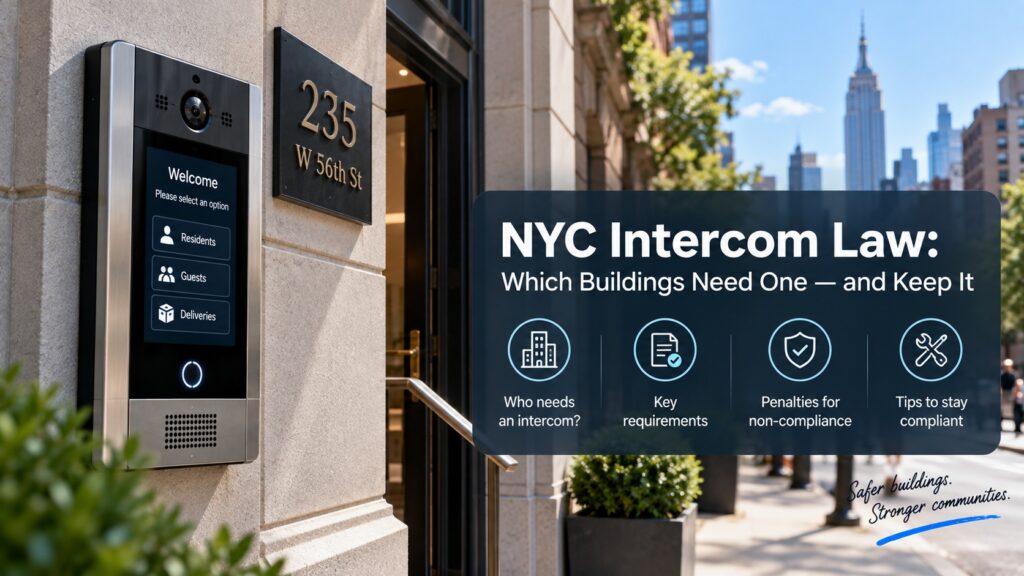
A wired intercom provides a direct physical connection between entrance equipment and the devices used by residents, employees, reception staff, or security personnel. This approach can be particularly practical when reliable communication is important, wireless coverage is limited, or the property already has suitable cabling.

Customized Security Solutions
We design tailored intercom and access control systems based on your property's unique requirements, ensuring the right fit for every project.

Professional Installation
Our experienced technicians handle every stage of the installation process, delivering reliable performance and attention to detail.

Advanced Technology
We provide modern, feature-rich solutions with cloud management, mobile access, and seamless integration capabilities.

Ongoing Support & Maintenance
From system setup to long-term service, our team is committed to keeping your security solutions operating efficiently.
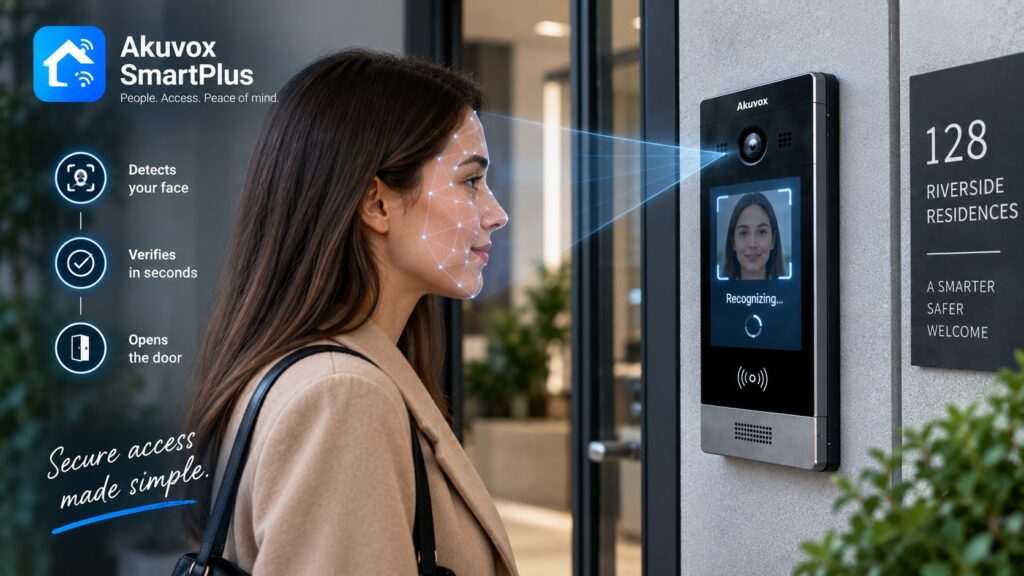
Akuvox NYC provides wired intercom solutions for residential and commercial properties in Queens. A wired intercom system for home in Queens can be configured around front doors, gates, garages, and other residential entrances, while commercial installations can support offices, warehouses, and other properties with more complex access requirements.
The right configuration depends on the building layout, distance between devices, existing infrastructure, and the way the entrance is used.
Wired Intercom Solutions for Properties in Queens
A wired intercom connects its main components through physical cabling rather than relying on a wireless connection between the entrance and receiving device.
This makes it suitable for many types of properties:
- Single-family homes.
- Townhouses.
- Apartment buildings.
- Condominiums.
- Office buildings.
- Commercial properties.
- Warehouses.
- Gated properties.
A basic installation may connect an entrance station to an indoor monitor. A larger system can include several entrance panels, multiple indoor stations, access control equipment, and compatible door or gate hardware.
The installation should be planned around the property’s actual access points and communication requirements.
How a Wired Intercom System Works
The basic communication path can be represented as:
Entrance station → cable infrastructure → indoor station or receiving device → communication → access authorization → door release.
Depending on the technology and equipment, the cabling can carry audio, video, control signals, network traffic, or power.
When a visitor presses the call button, the entrance station sends the request to the appropriate receiving device. The resident, employee, or receptionist can then communicate with the visitor.
If the system is connected to compatible electronic locking equipment, the authorized user can also activate the door release.
The physical connection between devices makes the system less dependent on wireless signal strength between the entrance and receiving location.
Where Wired Intercoms Can Be Installed
A wired configuration can be used wherever a permanent communication connection can be established.
- Front Doors. A door station can connect the main residential entrance with an indoor monitor or other receiving device.
- Building Entrances. Apartment and condominium buildings can use wired entrance panels to communicate with individual units or designated personnel.
- Apartment Lobbies. A lobby station can provide communication with residents and support compatible access control.
- Office Entrances. An office can use a wired intercom system for office in Queens to connect its entrance with reception, a security desk, or designated employees.
- Gates. A gate station can be connected to equipment inside the property when appropriate cabling is available.
- Parking Entrances. Vehicle access points can use intercom communication for drivers who need to contact building personnel.
- Loading Areas. Warehouses and commercial properties can use wired communication points at receiving or service entrances.
- Restricted Doors. Communication can be established before a visitor or contractor is allowed into a controlled area.
The cable route and installation environment should be considered for every location.
Main Advantages of a Wired Intercom
A physical connection can provide several practical advantages.
- Stable Connection. Communication between connected devices does not depend on the strength of a Wi-Fi signal between the entrance and receiving station.
- Predictable Performance. A properly installed cable provides a consistent communication path, which can be useful for permanent entrance equipment.
- Video Communication. Suitable cabling can support video communication when the selected devices and network architecture allow it.
- Reliable Door Communication. A permanent connection can provide consistent communication between an entrance station and the corresponding indoor device.
- Long-Term Installation. Properly installed cabling can remain part of the property’s infrastructure for many years and can support future equipment replacement when compatible.
Wired does not automatically mean better for every project. Installation conditions, building construction, existing infrastructure, and future requirements should all be considered.
Wired Intercom for New Construction
New construction provides an opportunity to plan the intercom infrastructure before walls and finishes are completed.
The cable routes can be designed together with:
- Entrance locations.
- Indoor monitor positions.
- Network equipment.
- Access control.
- Door hardware.
- Gate operators.
- Electrical infrastructure.
Planning these components in advance can reduce the need for visible cable routes and avoid unnecessary reconstruction later.
It can also provide an opportunity to prepare infrastructure for additional entrances or devices that may be added in the future.
For a new property, the intercom should therefore be considered as part of the overall building infrastructure rather than as an isolated device installed after construction.
Wired Intercom for Existing Buildings
Retrofitting a wired intercom requires a different approach.
The first question is whether the existing cabling can support the desired equipment. Older intercom systems may use wiring that is not suitable for newer video or network-based devices.
The installation team may need to evaluate:
- Existing cable type.
- Cable condition.
- Distance between endpoints.
- Available conduits.
- Wall construction.
- Existing power supplies.
- Network infrastructure.
- Door and gate hardware.
If suitable wiring is already present, some of the installation work may be simplified. If the infrastructure is outdated or damaged, new cabling may be required.
Wired Intercom for Doors and Gates
Doors and gates create different installation requirements.
A door station is usually located close to the entrance, making cable routing relatively straightforward in many properties. A wired door intercom in Queens can provide a permanent connection between the entrance station and the selected receiving equipment.
A driveway gate can be significantly farther from the house or building. The installation must account for the distance between the outdoor station and the receiving equipment.
The system may also need to communicate with:
- Electric locks.
- Electric strikes.
- Magnetic locks.
- Door controllers.
- Gate operators.
- Other compatible access control hardware.
Before installation, the existing door or gate equipment should be checked to determine how the intercom can be integrated.
Wired Video Intercom
A wired video intercom can combine visual identification with two-way communication.
For a residence, a wired video intercom system for home in Queens can connect an outdoor entrance station with an indoor monitor, allowing residents to see and speak with visitors before deciding whether to provide access.
When a visitor initiates a call, the receiving user can see the entrance through a compatible indoor monitor or other supported device.
This can help residents, employees, or reception staff:
- Identify visitors.
- Check who is waiting.
- Communicate before granting access.
- Handle deliveries.
- Verify contractors.
- Release a compatible entrance when appropriate.
Video quality depends on the selected equipment, cabling, network configuration, lighting, camera position, and other installation conditions.
For outdoor locations, the camera should also be positioned to provide a useful view of the visitor without creating unnecessary blind spots.
Wired Intercom and Access Control
An intercom and access control system can work together while performing different tasks.
Intercom → communication with visitors.
Access control → authentication of authorized users.
Lock or controller → physical operation of the entrance.
This allows a property to use different procedures for residents, employees, visitors, and contractors.
For example, employees can use assigned access credentials for regular entry, while visitors contact reception through the intercom. A resident can answer a visitor call and release the door when appropriate.
The exact configuration depends on the existing access control equipment and the type of locking mechanism installed.
Cable and Power Requirements
A wired installation should be planned around the physical and electrical requirements of the property.
- Cable Type. The appropriate cable depends on the intercom technology, communication requirements, distance, and equipment specifications.
- Cable Distance. Long distances between an entrance station and receiving device can affect the installation design and may require additional network or electrical equipment.
- Power Supply. Each component must have an appropriate power source. Some devices may use local power, while compatible network equipment may support Power over Ethernet.
- PoE. Compatible IP equipment can receive power and network connectivity through Ethernet when the switches and other infrastructure support PoE.
- Network Equipment. IP-based wired systems may require suitable switches, structured cabling, and network configuration.
- Outdoor Cable Routing. Cabling leading to gates and exterior entrances should be routed and protected according to the installation environment.
- Existing Wiring. Existing cables should be tested and evaluated before assuming they can be reused with new equipment.
These factors are particularly important during retrofit projects where cable routes and infrastructure may have been installed many years earlier.
Wired vs. Wireless Intercom
Both technologies can be appropriate, but the better choice depends on the property.
A wired system may be preferable when:
- A permanent connection is required.
- The property has existing suitable cabling.
- Wireless signal coverage is unreliable.
- The entrance is far from the receiving device.
- The system is being installed during construction.
- Several fixed devices need consistent connectivity.
A wireless solution may be more convenient when installing new cabling would be difficult or disruptive.
Building materials also matter. Concrete, brick, metal structures, multiple floors, and other physical obstacles can affect wireless connectivity.
The decision should therefore consider installation conditions rather than treating wired or wireless technology as universally superior.
When a Wired Intercom Is the Better Choice
Certain projects naturally favor a permanent cable connection.
- New Construction. Cabling can be planned before walls and finishes are completed.
- Large Properties. Long distances between entrances and receiving stations can make a permanent connection practical.
- Multiple Entrances. A structured cable infrastructure can connect several fixed communication points.
- Difficult Wireless Conditions. Thick walls, metal structures, underground areas, and other obstacles can make wireless communication less predictable.
- Critical Entrance Points. A permanent connection can be useful for entrances where consistent communication is important.
- Existing Cable Infrastructure. Properties with suitable wiring may be able to use it as part of a new installation or modernization.
- Future Expansion. A properly planned cable infrastructure can provide a foundation for additional compatible devices.
Upgrading an Old Wired Intercom
An older wired system may still have useful cabling even if the original equipment is outdated.
Modernization can include:
- Replacing the entrance panel.
- Installing new indoor monitors.
- Adding video communication.
- Upgrading damaged cabling.
- Connecting access control.
- Adding mobile functions.
- Replacing outdated door release equipment.
- Transitioning to compatible IP technology.
The existing infrastructure should be assessed before selecting the replacement equipment.
For example, an older cable may work with the original audio system but not provide the performance required for a modern network-based video installation.
A professional assessment can help determine which parts can be retained and which should be replaced.
How to Choose a Wired Intercom System
Several factors should be reviewed before choosing equipment.
- Number of Entrances. The number of doors, gates, parking entrances, and other access points determines the number of communication stations required.
- Distance Between Devices. The distance from the entrance to the indoor monitor or other receiving point affects cabling and equipment selection.
- Number of Users. A private home and a multi-tenant building have very different requirements for indoor stations and user management.
- Audio or Video. Video may be useful when residents, employees, or security personnel need to identify visitors visually.
- Door Release Requirements. The intercom should be compatible with the electric lock, strike, magnetic lock, gate operator, or controller used at the entrance.
- Existing Wiring. Existing cables should be inspected for type, condition, distance, and compatibility before being reused.
- Network Infrastructure. IP-based wired equipment may require suitable Ethernet cabling, switches, and network configuration.
- Indoor or Outdoor Installation. Outdoor equipment may require different specifications from devices installed inside a building.
- Future Expansion. The system should leave room for additional devices or entrances if the property is expected to change.
Wired Intercom Installation in Queens
Akuvox NYC provides professional wired intercom installation for residential and commercial properties in Queens.
For commercial facilities, a wired intercom system for business in Queens can be planned around employee entrances, reception areas, loading zones, gates, offices, warehouses, and other controlled access points.
The installation process can include:
- Inspecting entrances and communication points.
- Evaluating existing cabling.
- Checking network infrastructure.
- Determining cable routes.
- Assessing door and gate hardware.
- Selecting compatible Akuvox equipment.
- Designing the system.
- Installing or upgrading cabling.
- Installing entrance stations.
- Installing indoor monitors.
- Connecting door or gate release equipment.
- Configuring communication.
- Testing audio and video.
- Testing access functions.
- Providing user guidance.
- Supporting the installed system.
For occupied properties, the installation can be coordinated to minimize disruption to residents, employees, tenants, and visitors.
Why Choose Akuvox for Wired Intercom?
Akuvox provides intercom and access technologies that can be configured for different residential and commercial applications.
Depending on the project, a wired installation can include:
- Video doorphones.
- Indoor monitors.
- IP/SIP communication devices.
- Compatible PoE equipment.
- Access control terminals.
- Door controllers.
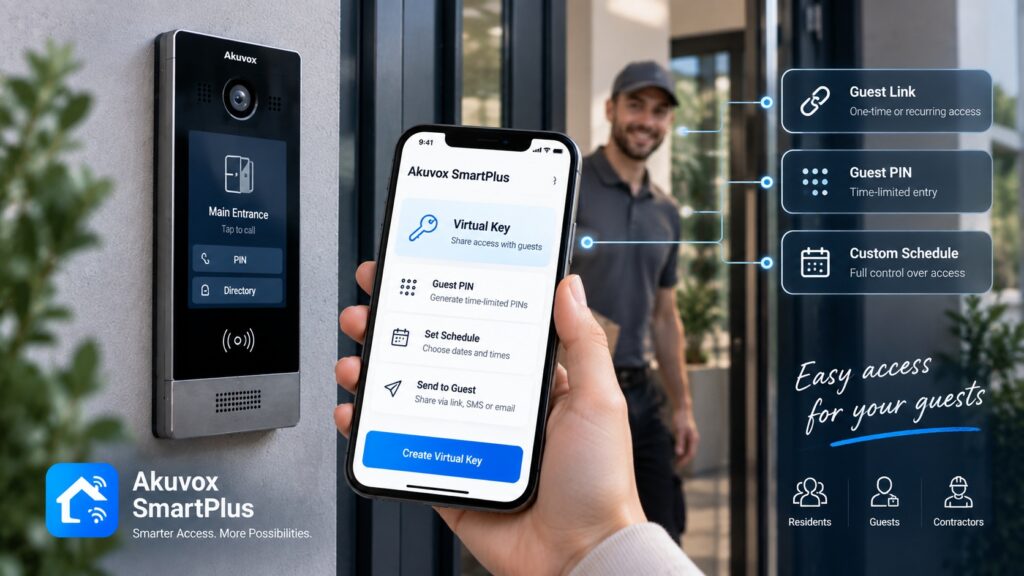
- Mobile communication functions.
- Gate integration.
- Solutions for modernization projects.
The equipment can be selected according to the property’s infrastructure and the functions required at each entrance.
Akuvox NYC can assist with system planning, equipment selection, cabling considerations, installation, configuration, access control integration, and technical support in Queens.
Install a Wired Intercom System in Queens
A wired intercom can provide a stable communication path between entrances and the people responsible for answering calls. It can be used for homes, apartment buildings, offices, commercial properties, warehouses, gates, and other facilities where a permanent connection is practical.
The most suitable solution depends on the property’s layout, existing cabling, distance between devices, entrance hardware, and required functions.
Akuvox NYC can evaluate your existing infrastructure, determine the appropriate cable and equipment configuration, and provide professional installation and setup in Queens.
Contact Akuvox NYC to discuss your property and plan a wired intercom solution designed around its entrances, communication requirements, and existing infrastructure.
Other Services in QUEENS
Other Locations we Serve
FAQ
A wired intercom connects its main communication devices through physical cabling. Depending on the technology, the connection can carry audio, video, network communication, control signals, or power.
A wired connection is not affected by wireless signal strength between the connected devices, which can make it a practical choice for permanent installations. Reliability also depends on the quality of the cabling, equipment, power, and installation.
Yes. Compatible wired systems can support video communication between an entrance station and an indoor monitor or other receiving device.
A compatible system can operate an electronic door release when connected to suitable access control and locking equipment.
Yes. A gate intercom can be connected to compatible gate equipment, provided the cabling, distance, power, and gate operator are suitable for the planned installation.
The maximum distance depends on the technology, cable type, network architecture, power requirements, and specific equipment. The distance should be evaluated during system design rather than estimated from the intercom alone.
Sometimes. Existing wiring should be inspected and tested to determine whether its type, condition, distance, and capacity are compatible with the new system.
Compatible IP devices can use Power over Ethernet when the network equipment and cabling support PoE.
In some cases, an existing wired system can be modernized with IP equipment. The feasibility depends on the existing cables, network infrastructure, entrance devices, and desired functionality.
The cost depends on the number of entrances, equipment, cable routes, existing infrastructure, door or gate hardware, access control integration, and installation complexity. A site assessment is needed for an accurate estimate.
How It Works
Consultation & Needs Assessment
We discuss your property, security goals, and operational requirements to understand your specific needs.
Customized Solution Design
Our specialists recommend and design an intercom or access control solution tailored to your home, apartment building, or commercial facility.
Professional Installation
Certified technicians install and configure all system components, ensuring seamless integration and reliable performance.
Ongoing Support & Maintenance
We provide system testing, user training, maintenance, and technical support to keep your solution operating efficiently for years to come.
Get a Quote
Need an access control or intercom system? Tell us about your project and get a tailored solution from Akuvox NYC.
Other Services


Latest Articles