
Audio vs Video Intercom: Which Does Your Building Need?

Replacing a building’s entry system usually comes down to one early question: audio vs video intercom. Do residents just need to talk to whoever is at the door, or do they need to see them too? The answer shapes cost, wiring, and most of all security, so it is worth understanding both before you decide rather than defaulting to whatever is cheapest.
We install both kinds across New York, and while video has become the popular choice, audio still has a place. Here is an honest comparison of how each works and which fits which building.
In short, an audio intercom lets residents speak with a visitor and buzz them in, while a video intercom adds a camera so residents see the caller before opening the door. Video costs a little more but closes a real security gap, which is why most buildings now choose it.
Audio vs video intercom: the short answer
 For most buildings today, video is the better long-term choice, because seeing a visitor is a meaningful security upgrade over hearing one. That said, the right answer depends on budget, building type, and what the entrance actually demands.
An audio system is simpler and cheaper and still does the core job of controlled entry. A video system adds verification, deterrence, and a record. The rest of this guide lays out exactly where each one wins so the decision fits your building rather than a generic rule.
It also helps to remember this is a long-term decision. An entry system typically stays in place for a decade or more, so the goal is not the cheapest option this year but the one that still serves the building well years from now. That longer view tends to favor video, but only where the building actually benefits from it.
What an audio intercom is
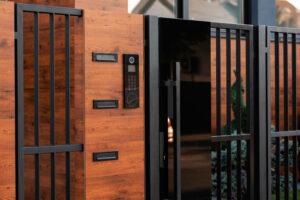 An audio intercom is the classic setup many older buildings already have: the familiar door buzzer. A visitor presses a button, the resident’s unit rings, and the two can speak.
If the resident is satisfied, they press a button to release the door. It is a proven, straightforward system that has secured buildings for decades, and its simplicity is part of its appeal. The limitation is equally simple: the resident hears the visitor but cannot see them, so admitting someone is always a decision made partly on trust.
For some buildings that trust is acceptable. In a small building where residents recognize most callers, an audio buzzer has worked fine for years and may continue to. The question is whether your entrance sees enough unfamiliar visitors, couriers, contractors, and guests, that not seeing them becomes a genuine risk rather than a minor inconvenience.
What a video intercom is
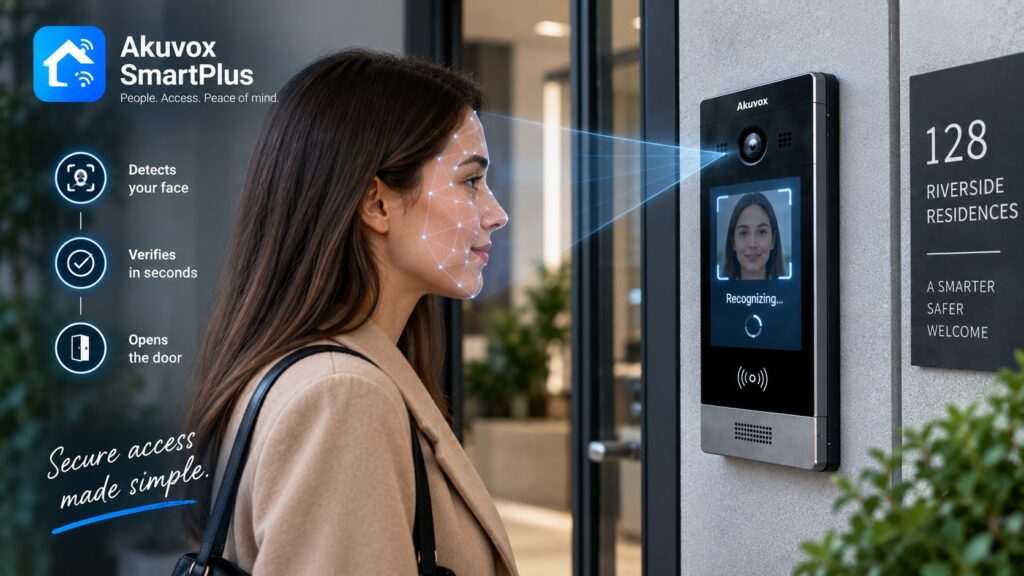
A video intercom does everything an audio system does and adds the one thing it lacks: a picture. The door station includes a camera, often around 2 MP, so the resident sees a live image of whoever is calling.
When the unit rings, the resident gets both audio and a clear view of the visitor on an indoor monitor or a smartphone, then decides whether to open the door. That single addition transforms the interaction from a guess into a verification, which matters most for deliveries, service workers, and anyone the resident is not expecting.
That verification is the heart of video’s value. A resident can tell at a glance whether the person claiming to be a delivery driver actually is one, or whether the figure at the door matches the friend they are expecting. It removes the moment of doubt that an audio-only system leaves hanging, and for many residents that reassurance is the whole reason to upgrade.
Audio vs video at a glance
Here is how the two stack up on the factors that drive the decision.
| Factor | Audio intercom | Video intercom |
|---|---|---|
| Sees the visitor | No, audio only | Yes, live camera |
| Security level | Basic, trust-based | Higher, verified entry |
| Cost | Lower | Moderately higher |
| App and remote | Limited | Common with cloud |
| Best fit | Tight budgets, simple buildings | Most modern buildings |
No row makes audio useless; it simply shows that video buys real advantages for a modest premium.
Security: the biggest difference
If one factor should drive this decision, it is security, and that is where the two genuinely diverge. The gap is not subtle.
- Verify before opening: Video lets a resident confirm who is actually there, instead of buzzing in a voice that claims to be a neighbor or courier.
- Deterrence: A visible camera at the door discourages mischief in a way an audio panel never can.
- A visual record: Many video systems capture who came to the door, giving evidence an audio system cannot.
- Safer for everyone: Residents, especially those living alone, gain real peace of mind from seeing a caller first.
None of this means an audio system is reckless; buildings ran on them safely for a long time. It means video raises the floor on entrance security in a way that is hard to match otherwise, turning every admit decision into an informed one. For a building weighing the two, security is usually the factor that tips the scale toward video.
Cost and wiring
Budget is usually the reason anyone considers audio, and it is a fair point. An audio system has fewer components and is generally cheaper to buy and install.
The good news is that video no longer requires a costly rewire in most buildings. Modern 2-wire video systems run on the same 2 conductors an old audio buzzer used, so the wiring cost is often similar; the difference is mainly in the door station and the in-unit devices. That has narrowed the price gap considerably and is a big reason video adoption has climbed. Over a system’s lifespan of many years, the modest extra cost of video is easy to justify.
When audio still makes sense
Audio is not obsolete, and there are situations where it remains a sensible pick.
- The tightest budgets: When every dollar counts and basic controlled entry is the only requirement.
- Very small or simple buildings: A small building where residents know most callers may not need video.
- Low-traffic side doors: A secondary entrance with light use where verification matters less.
- Temporary setups: A short-term need where investing in video is hard to justify.
When video is the right call
For most buildings, the case for video is strong and getting stronger.
- Security is a priority: Any building where verifying visitors meaningfully reduces risk.
- Deliveries are constant: Seeing couriers and managing packages is far easier with a camera.
- Residents expect it: A screen at the door has become a basic expectation rather than a luxury.
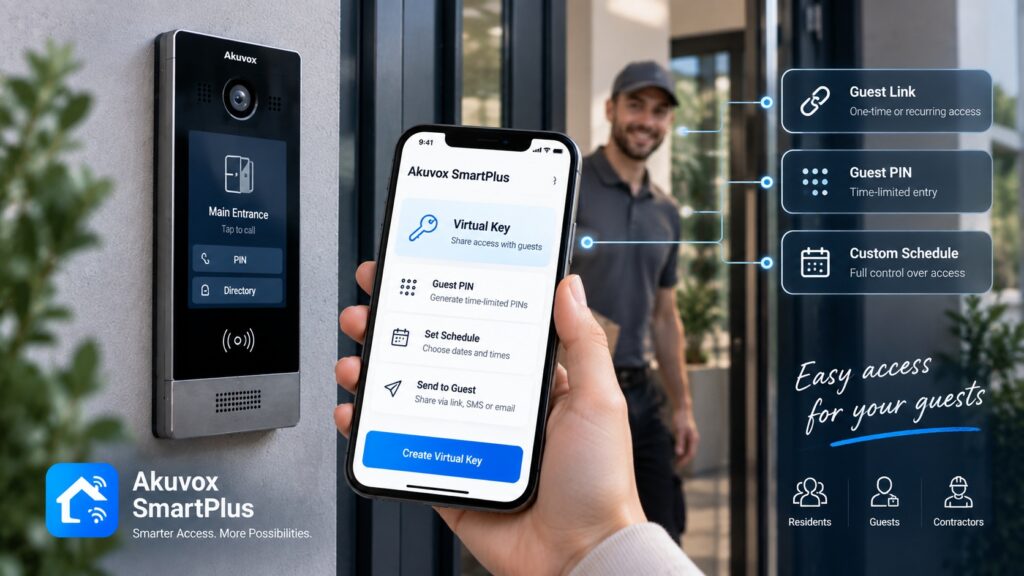
- App access matters: Buildings that want remote answering and guest codes need the video-and-cloud combination.
What most NYC buildings choose
In practice, the trend across the city is clear: most buildings upgrading their entry system now choose video. Residents expect to see who is at the door, boards increasingly treat it as standard security, and the shrinking wiring-cost gap removes the old reason to settle for audio.
Audio remains a reasonable choice for the tightest budgets and the simplest buildings, but for a typical multi-unit building making a once-in-a-decade upgrade, video delivers more security and convenience for a difference in cost that is usually small. When in doubt, most owners are better served future-proofing with video.
Frequently asked questions
Is a video intercom worth it over audio?
For most buildings, yes, because seeing a visitor before opening the door is a real security upgrade, and modern 2-wire video often costs only modestly more than audio.
Does video cost a lot more than audio?
Less than it used to; modern video runs on the same 2-wire cabling as an old buzzer, so the gap is mainly the door station and in-unit devices, not a costly rewire.
Is an audio intercom still secure?
It provides basic controlled entry, but residents admit visitors without seeing them, so it relies on trust in a way video does not.
Can I upgrade from audio to video without rewiring?
In most older buildings, yes, because a 2-wire video system reuses the existing pair, making the switch affordable and low-disruption.
Which is better for an apartment building?
Video is the usual choice for multi-unit buildings, thanks to visitor verification, delivery management, and app access, with audio reserved for the tightest budgets.
Still weighing audio against video? We will recommend honestly based on your building. Explore our intercom system service, see a video door station like the R29, look at 2-wire options like the R20K-2, or ask us what fits.
Related Articles